Running a pool pump on solar in Cyprus: the summer maths
In August a pool pump can quietly become one of the largest items on your bill. It also happens to be the load that matches solar better than almost anything else in the house.
By Charis Kasiouli, Mechanical Engineer · 4 min read · Published 2026-08-07
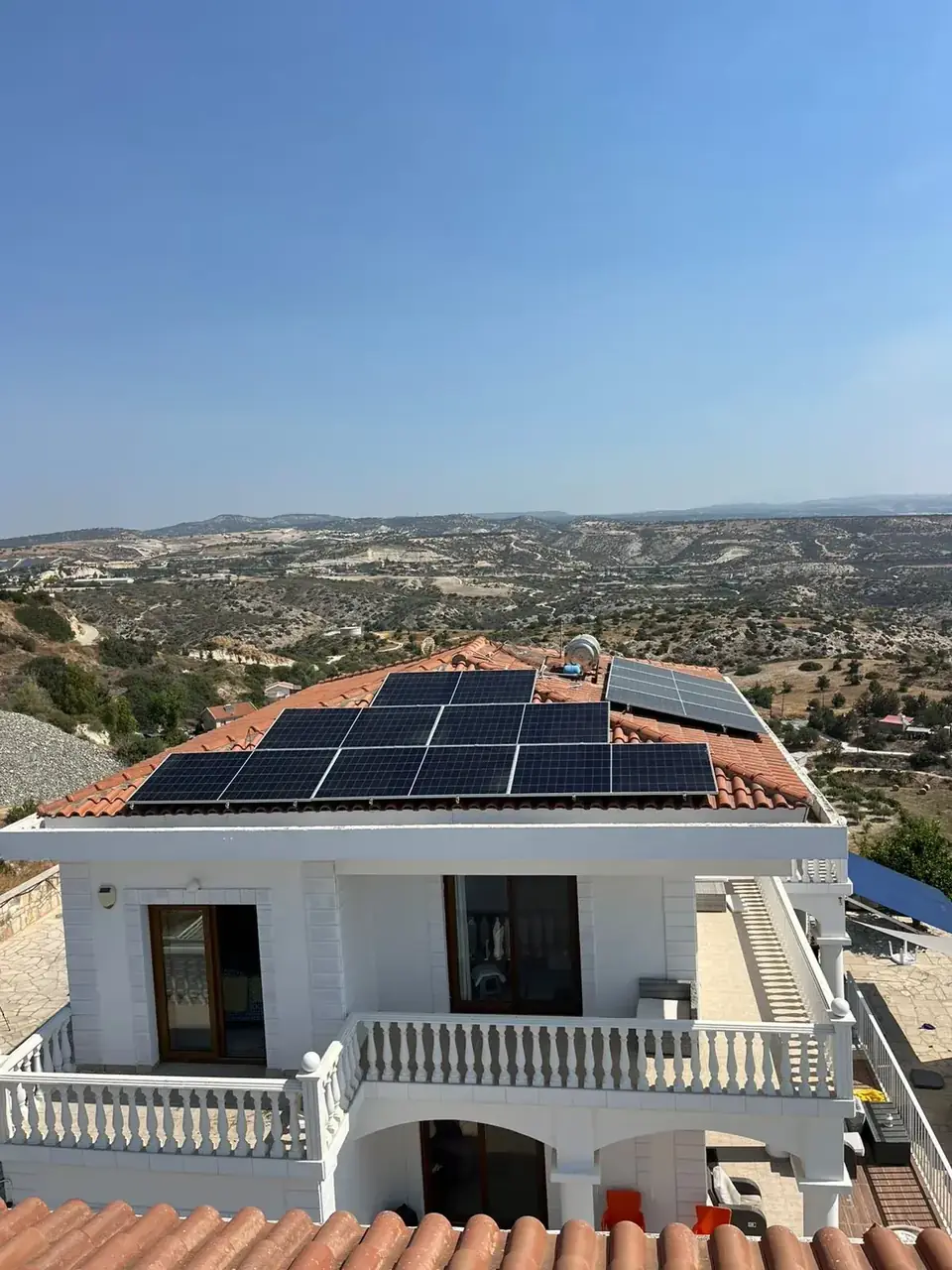
Filtration runs for hours every day through the hottest months, right when the rest of the house is also drawing hard on air conditioning. The pump rarely gets blamed, because it runs quietly in the background.
Work out your own number first
Before anyone quotes you anything, it is worth knowing what your pump actually costs to run. The arithmetic is simple:
- Pump power in kW × hours per day = kWh per day
- Multiply by the days you run it across the season
- Multiply by roughly €0.26 per kWh, a reasonable average EAC rate
The pump rating is on its nameplate, usually in kW or horsepower. One horsepower is about 0.75 kW. Run that calculation and you will have a real figure rather than a guess, which is the only sensible starting point.
Why a pool is the cleanest match for solar
Most solar decisions in Cyprus now revolve around self-consumption, because under Net Billing exported energy is credited well below what you pay to import. That makes timing everything.
A pool is unusual in that its demand naturally sits in the middle of the day. You are not trying to shift consumption to match the sun. It already matches.
What a direct solar pump changes
In a direct arrangement, panels feed a DC pump through a controller. As the sun strengthens the pump speeds up; as it fades it slows and eventually stops. There is no battery and, in the basic configuration, no grid connection.
- Fewer components, so less to fail
- Filtration concentrates mid-day, when circulation matters most
- The seasonal balance works in your favour: the sunniest months are the heaviest-use months
The honest limits
A direct solar pump follows available sunlight. On a heavily overcast day it will run slower and for less time. For most pools that is perfectly acceptable and the season averages out.
If your situation genuinely needs filtration on a fixed schedule regardless of weather, say so early. That is a different design, usually with a grid fallback, and it is better to build it in than to discover the gap later.
What we would need to size it properly
- Pool volume and the turnover rate you actually need
- Pipework and head, including the filter and any water features
- Panel location, orientation and shading through the day
- Whether you need guaranteed hours regardless of conditions
Without those, any quoted system size is guesswork, and guesswork is how undersized pumps get installed.
Where to go next
Our solar pool pumps page covers the equipment and approach in more detail. If you are also weighing up solar for the whole property, the cost calculator sizes a system from your EAC bill and shows an indicative price.