Solar panel cleaning in Cyprus: how often and why it matters
Dust and Saharan sand measurably reduce output in Cyprus. A practical cleaning and inspection schedule for local conditions.
By Charis Kasiouli, Mechanical Engineer · 2 min read · Published 2026-03-12 · Updated 2026-06-02
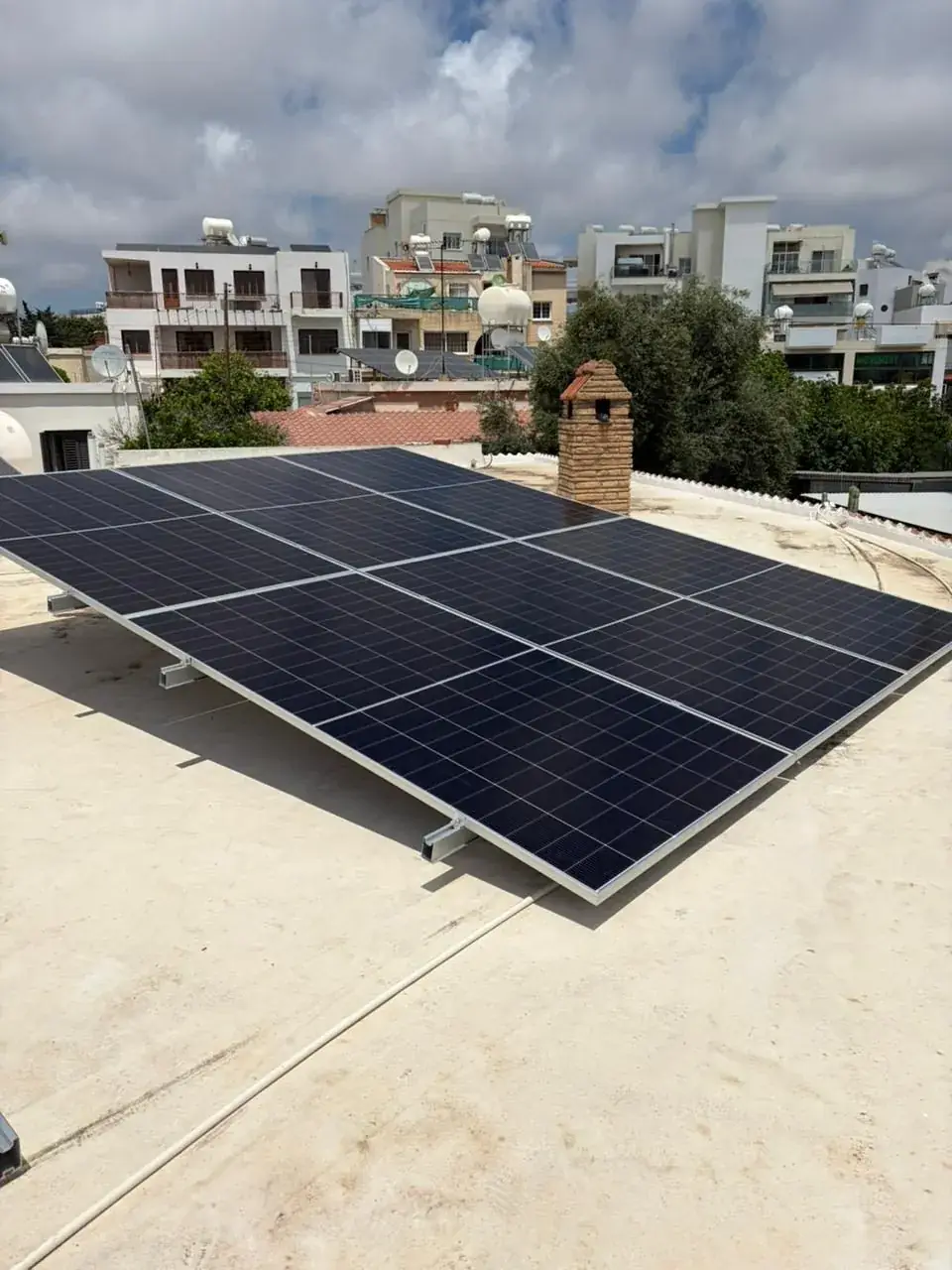
Cyprus combines low rainfall with regular dust events, including Saharan sand episodes that leave a visible film on panels. Soiling reduces production; the exact loss varies with location, tilt and season, and you can usually see it directly in your monitoring data after a dust event.
A practical schedule
- Professional cleaning once or twice a year, ideally after the spring dust season, restores production and lets a technician inspect the system up close.
- After major dust events, check your monitoring app: a clear drop in production on sunny days suggests cleaning will pay for itself.
- Avoid DIY cleaning with tap water and pressure washers. Hard water leaves mineral deposits, and pressure can damage seals. Proper cleaning uses purified water and soft brushes.
What an inspection covers
Alongside cleaning, we visually inspect mounting, cabling, connectors and the inverter, and review production data for anomalies such as string underperformance, catching small issues before they become failures.
Reading your monitoring after a dust event
Your monitoring app is the cheapest diagnostic tool you own. Compare a clear-sky day before and after a Saharan dust episode: if peak production has dropped noticeably and stays down through the following sunny days, the film on the glass is costing you money every afternoon.
Production that recovers after rain tells you the soiling was light; production that does not means deposits have bonded to the glass and need proper washing.
Why technique matters more than frequency
Panels are tough on top but sensitive at the edges: seals, junction boxes and connectors do not appreciate pressure jets or sudden cold water on hot glass. Professional cleaning uses purified water, soft brushes and early-morning hours when the glass is cool.
It also pairs naturally with inspection, because a technician standing at the array will notice a loose clamp, a chewed cable or a discoloured connector that no app can see.
A simple owner's routine
- Glance at your monitoring weekly; investigate any unexplained step down in production.
- Book professional cleaning once or twice a year, ideally after the spring dust season.
- After storms, look from the ground for shifted panels or hanging cables, and call us rather than climbing.
Frequently asked questions
Related on our site
- Solar panels in Paphos: a local homeowner's guide
- How big should your solar system be?
- Solar Maintenance & Cleaning in Paphos
- 5kW Solar System
- Free energy assessment